Do You Really Need 10,000 Steps Daily?
Two weeks ago, I joined a 10,000-step challenge without thinking twice about it.
I’ve struggled with maintaining a consistent workout schedule since giving birth, and 2025 was supposed to be the year I finally get my shit together. Maybe you can relate—that cycle of ambitious goal setting followed by abrupt crash when life starts lifing.
Since the start of the year, I’ve gone all in on my workouts for a couple weeks, then ghosted my program for several more. This step challenge felt like my chance to finally try something I’d always been curious about!
It was only 10,000 steps, right? How hard could it be?
Armed with my new step tracker, I started my stepping challenge. Turns out, hitting 10,000 steps is tougher than I expected.
What My 10,000 Steps Challenge Actually Taught Me
Many people don’t realize how hard it is to reach 10,000 steps a day when you work in an office. Sitting for seven or more hours leaves little time to stay active. And if you’re a parent or caretaker, you probably head home to a “second shift” of caregiving and housework. By the end of the day, fitting in those 10,000 steps can feel like a full-time job.
The week I started my 10,000 steps a day challenge, I went on 20-30 minute jogs three to four times, which got me 40-50% of the way to my goal before I even reached the office. But between lazy mornings paired with YouTube workout videos and weekends juggling my kid, and a business, hitting 10,000 steps every day was much harder than I expected—and honestly, exhausting.
I had to get creative. Mindful walks around the office building. Taking my laptop on backyard walks when working remotely. Afternoon stroller walks where I’d keep moving around the playground instead of sitting down.
My husband would find me pacing between the kitchen and dining room at night, making final desperate attempts to reach my goal. It was hilarious, honestly.

The truth is, you don’t actually need 10,000 steps a day to get some major health benefits. At least, that’s what the latest research suggests…
The Plot Twist
While women around the world were sharing their wins, some days I definitely was failing. Some days I’d get close; other days I’d fall behind.
But just when I was feeling defeated, I discovered a recently published meta-analysis examining the association between daily steps and mortality—and the findings blew my mind.
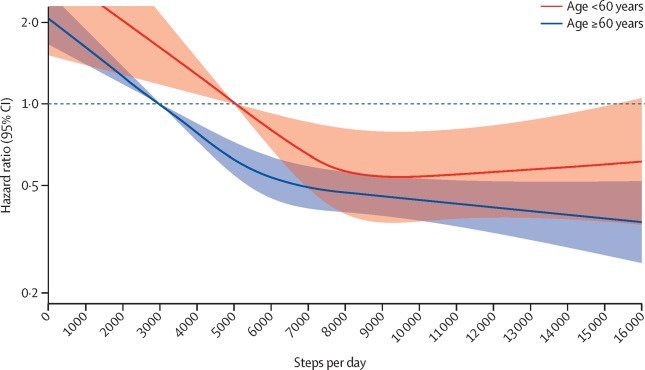
Compared to those taking the fewest steps (around 3,553 daily), people taking just 5,801 steps per day—roughly half the popularized 10,000-step goal—experienced a 40% reduction in all-cause mortality risk. The protective effect continued increasing, reaching 53% mortality reduction for those averaging 10,901 steps daily.
Even more revealing: mortality benefits plateau at 6,000-8,000 steps for adults over 60 and 8,000-10,000 steps for younger adults, meaning significant health gains are achievable well below a widely promoted 10,000-step threshold.
The Permission Slip I Didn’t Know I Needed
Reading the analysis changed something in me. Instead of beating myself up for not reaching 10,000 steps, I started celebrating my body. I celebrated the wins, even if they were 5,000 or 9,283 steps.
The fact that I was committed to intentionally moving my body more? That was the real gift. Turns out, falling short of 10,000 steps taught me how to walk my own path—and redefine what “putting my steps in” really means.
If your lifestyle is more sedentary, and all you can manage is 4,000-5,000 steps daily, know that’s enough to make a difference in your health. Because if the science shows we can get most of the health benefits with 70% of the effort, why are we making this harder than it needs to be?